
Global Mental Health Crisis
There is a quiet crisis unfolding across the world, one that does not always announce itself in visible catastrophe, but instead unfolds in the private spaces of human life inside families, inside young people, inside the unseen struggles that do not reach institutions until they have already become acute.
It is the crisis of behavioural health.

The Human Reality
Behavioural suffering is one of the most universal experiences on earth and yet the systems built to respond to it often treat the visible crisis without transforming what created it. Addiction, trauma, anxiety, depression, and complex mental health challenges present in different forms, but they frequently share a common pattern: destructive coping emerges as an adaptation to internal threat, unresolved pain, shame, identity injury, or emotional overwhelm.
When support is temporary or shallow, the cycle returns. The person may look better for a short time, but the underlying drivers remain untouched — and so the system quietly resets. This durability gap shows up clearly in addiction care: relapse rates for substance use disorders are commonly cited at ~40–60%, and some studies report relapse as high as ~40–75% within weeks to months post-treatment.
That is why behavioural health is a category of persistent need: not because people don’t want recovery, but because durable, repeatable outcomes remain rare.
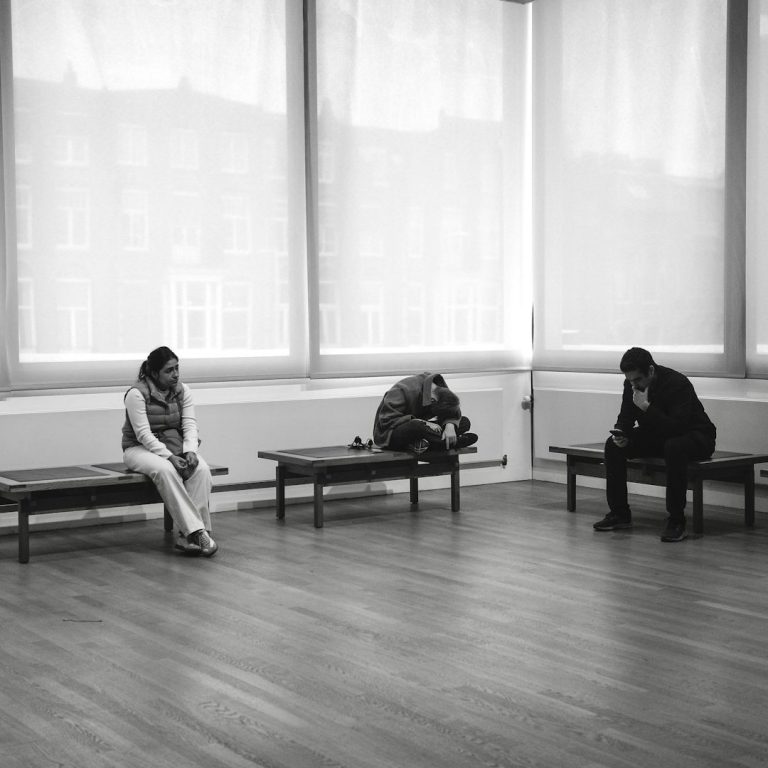
Not simply the presence of Addiction, Trauma, or Anxiety, but something deeper: the slow erosion of coherence in the human being. A fragmentation of identity, of meaning, of regulation, of direction. A person begins to drift not always visibly at first away from stability, away from purpose, away from themselves. And by the time the system encounters them, what presents as a clinical issue is often only the surface expression of something far more rooted.
Across nations, systems have responded with effort, investment, and expansion. More services, more programmes, longer stays, greater capacity. And yet, despite this, a pattern remains consistent, measurable, and deeply concerning.
Stabilisation is achieved. Risk is reduced. The individual completes a programme. They are discharged.
And then, often quietly, the pattern returns.
Not always in the same form. Sometimes in new behaviours, sometimes in relapse, sometimes in crisis. But it returns. And the system meets them again at the point of breakdown, rather than at the point of resolution.
This is not a failure of professionals. It is not a failure of intention. It is a failure of design.
Because many systems have been built to manage instability, not to resolve it.
They treat the visible behaviour, but not always the underlying driver. They reduce symptoms, but do not always restore the person. They discharge individuals back into life without ensuring that the internal conditions that produced the behaviour have been transformed.
And so recurrence becomes predictable not because individuals are unwilling to change, but because the architecture of care does not fully resolve what drives the behaviour in the first place.
We stands at a unique moment in history. A moment not only of economic transformation, but of societal shaping. at its core, a project of human potential of building a society that is resilient, productive, stable, and capable of carrying its future with strength.
Behavioural health sits at the centre of that ambition.
BEcause the stability of a nation is not only built through infrastructure, policy, or investment. It is built through the stability of its people. Through the integrity of its families. Through the resilience of its youth. Through the capacity of individuals to regulate themselves, to align with values, to function in the world with clarity and direction.
Where behavioural health is unresolved, the consequences are not isolated. They ripple outward:
into families, where strain becomes breakdown.
into young people, where vulnerability becomes exposure.
into education, where potential becomes disruption.
into the workforce, where productivity becomes instability.
into communities, where trust begins to erode.
And perhaps most significantly, into the hidden spaces where suffering is carried silently, delayed by stigma, by fear, by the desire to protect reputation, until it returns later in a more acute and costly form.
This is not only a clinical challenge. It is a societal one.
And it requires a different response.